
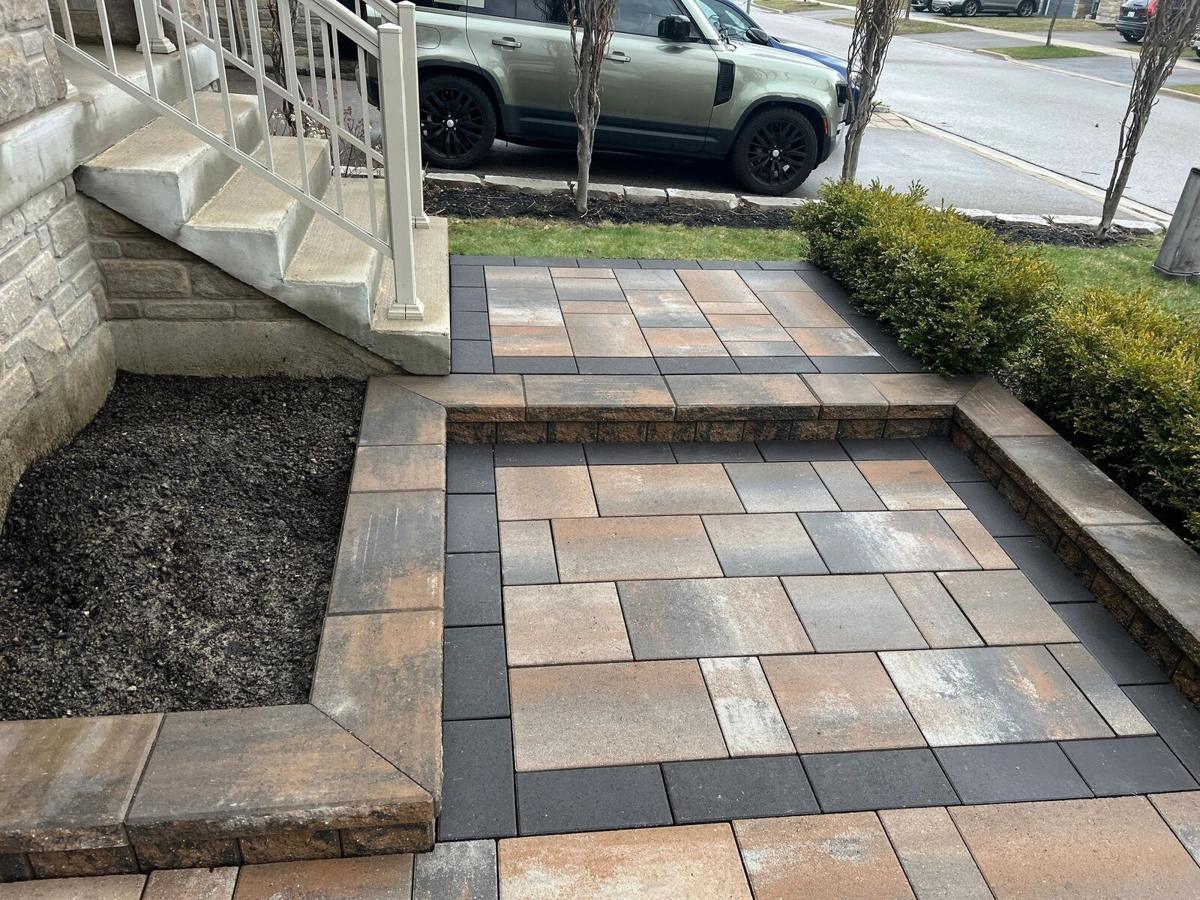
A well-maintained interlock surface can stand the test of time. Whether you’ve just had a new driveway or a fresh patio installed, a little regular care keeps your investment looking great and performing well for years. Here’s how to look after your interlocking pavers once construction is complete.
Give it time to settle
After installation, the pavers need time to settle into place. Wait at least 24–48 hours before using the surface heavily, especially on a driveway. During this window the joint sand between the pavers compacts and creates a solid, stable base.
Sweep and clean regularly
Regular cleaning is the foundation of long-term maintenance.
- Sweep often. Dirt, leaves, and debris collect between the pavers, so keep the surface tidy. A stiff-bristled broom works best.
- Power wash occasionally. Every year or so, give the driveway or patio a good power wash to lift deeper grime or moss. Use a lower pressure setting to avoid damaging the pavers.
- Skip the harsh chemicals. It’s tempting to reach for a heavy-duty cleaner, but it can damage the surface. For most cleaning, a mild soap and water solution is all you need.
Keep weeds and joint sand in check
- Seal the surface. One of the most effective ways to prevent weeds from taking hold between pavers is to seal them with a high-quality, breathable sealant. Sealing also protects the surface from staining and weathering.
- Pull weeds early. Some weeds may still try to push through. Pull them as soon as you spot them — the earlier you remove them, the less chance they have to get established.
- Top up polymeric sand. If the sand between the pavers starts to wash away or loosen, reapply polymeric sand. It hardens when wet, locks the pavers in place, discourages weeds, and adds durability.
Watch for shifting and settling
Even with proper installation, some settling or shifting is inevitable over time, especially in high-traffic areas.
- Inspect for movement. Check the surface periodically for uneven spots. If you find any, the pavers can be lifted, more sand added, and then reset.
- Check the edges. The perimeter of a driveway or patio is where pavers are most likely to shift. Inspect the edge restraints every few years and replace them if needed. If the edges begin to deteriorate, adding restraints or more compacted base material keeps everything securely in place.
Reseal every few years
- Protect the finish. Resealing your interlock every 2–3 years maintains the colour and shields the pavers from the elements. This matters most on surfaces exposed to plenty of UV, rain, or foot traffic.
- Choose the right sealer. Sealers come in a range of finishes, from matte to glossy. A matte finish is the most popular choice for a natural look, but the call is yours.
Go easy on driveways
If you’ve installed an interlock driveway, avoid parking or storing heavy vehicles or equipment that could cause the pavers to shift or crack. Heavy loads strain the interlocking system, particularly while the pavers are still settling.
Tackle stains right away
- Act fast on spills. Oil, gas, and other substances can stain pavers if left untreated. Clean up spills immediately to avoid lasting damage — a mild degreaser or dish soap and water handles most of them.
- For tough stains. For rust or other stubborn marks, specialized cleaners made for interlocking pavers can lift the stain without harming the surface.
Winter care in cold climates
- Shovel carefully. In snow-prone areas, use a plastic or rubber-edged shovel. Metal shovels can scratch and damage the pavers.
- Avoid de-icing salts. Traditional rock salt can damage pavers over time. Reach for non-corrosive alternatives like sand or a salt-free deicer to keep traction through the winter.
Repairing cracked or damaged pavers
If you spot a cracked or broken paver, address it right away — replacing an individual paver is straightforward. Lift out the damaged piece, clean the area, and set a new one in its place. Make sure it sits flush with the surrounding pavers, and pack the joint sand properly before locking it in.
These small, regular steps go a long way. Consistent care keeps the surface looking beautiful and extends the life of your interlock, saving you from costly repairs down the road.
Have a question about your pavers, or want a hand keeping them in top shape? Book a free on-site estimate and we’ll take a look with you.